Description
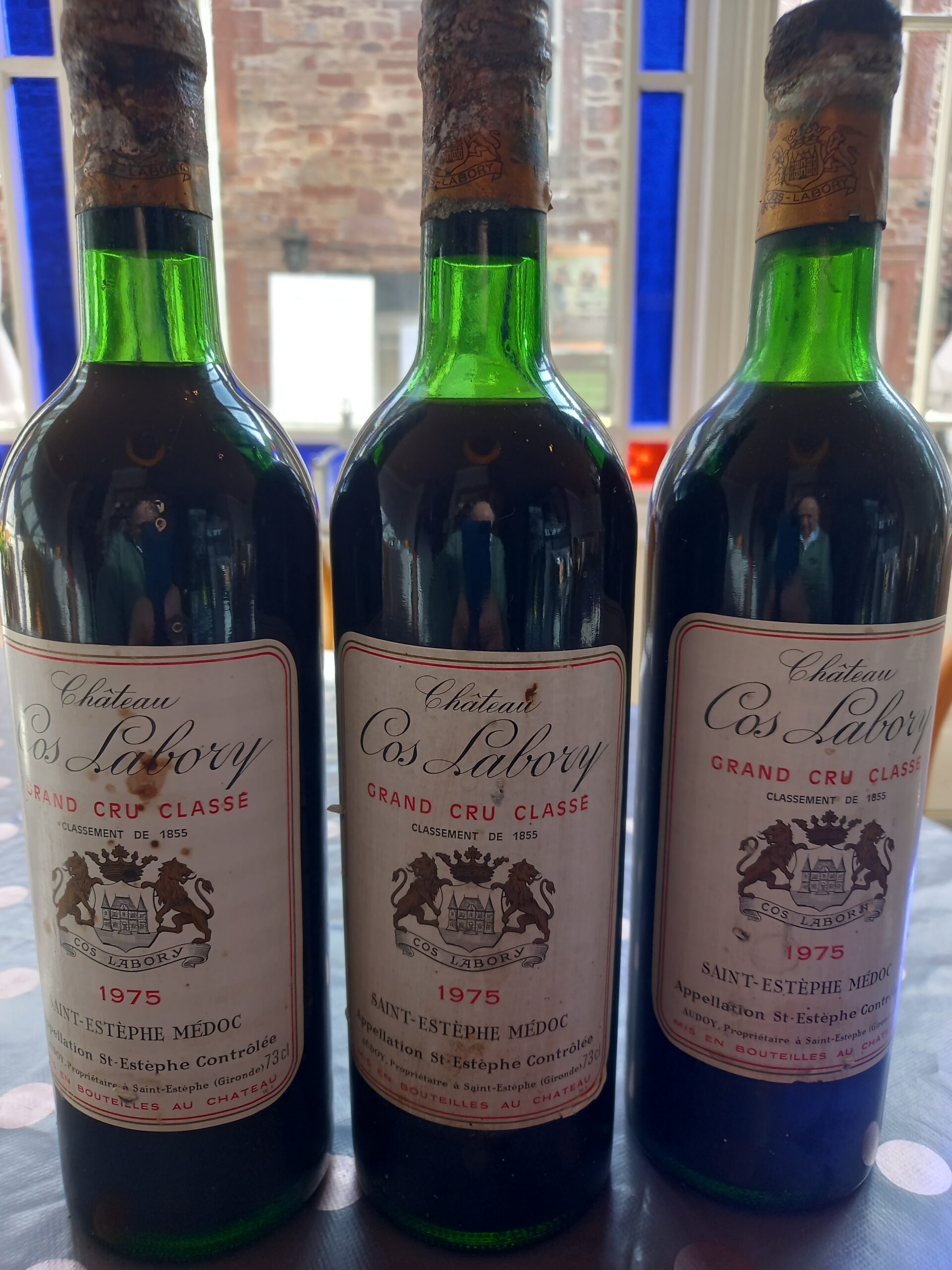
The 1975 Château Cos Labory is a Fifth Growth (Cinquième Grand Cru Classé) red wine from the Saint-Estèphe appellation in Bordeaux, France.
While 1975 was a historically significant year for Bordeaux—known for producing wines with powerful tannins and longevity—this specific vintage of Cos Labory is widely considered to be at the end of its drinking window
Classification & Background
- 1855 Classification: It holds the status of a Fifth Growth, a prestigious ranking among Médoc estates.
- Terroir: The vineyard is situated on a gravelly hilltop adjacent to its more famous neighbor, Château Cos d’Estournel, which recently acquired the estate in 2023.
- Composition: A traditional Left Bank blend typically dominated by Cabernet Sauvignon, with Merlot and Cabernet Franc.
Tasting Profile & Maturity
- Current State: Critics and community reviews note that while the wine may still retain a “good nose” with tertiary notes of leather, cedar, and tobacco, the fruit has likely faded significantly.
- Texture: In well-preserved bottles, you can expect a medium body with the firm, drying tannins typical of 1970s Saint-Estèphe.
- Drinking Window: It is recommended for immediate consumption; many bottles may now be “thin” or showing signs of decline.
 CellarTracker +4
Market Value
- Price Range: Individual bottles typically fetch between £50 and £80 ($65–$100) at auction or via specialist retailers, depending on the condition of the label and fill level.
- Recent Performance: As a “pre-Parker” era wine, it is often sought after more by collectors for historical interest than for high-scoring tasting experiences.
 Wine-Searcher +3
Serving Suggestions
- Decanting: If opening a bottle now, decant only briefly to remove sediment. Long exposure to air may cause what remains of the delicate aromatics to dissipate quickly.
- Pairing: Pairs traditionally with roasted beef, venison, or aged hard cheeses